
There is no denying that the big cats of Africa tend to take up all the spotlight during an African safari. It offers a unique opportunity to see these ferocious predators in their habitats. From the Big Cat group, the lion, the leopard, and the cheetah have populations dispersed across the continent.
Here is a glimpse inside the secret lives of Africa’s predators:
African Lion
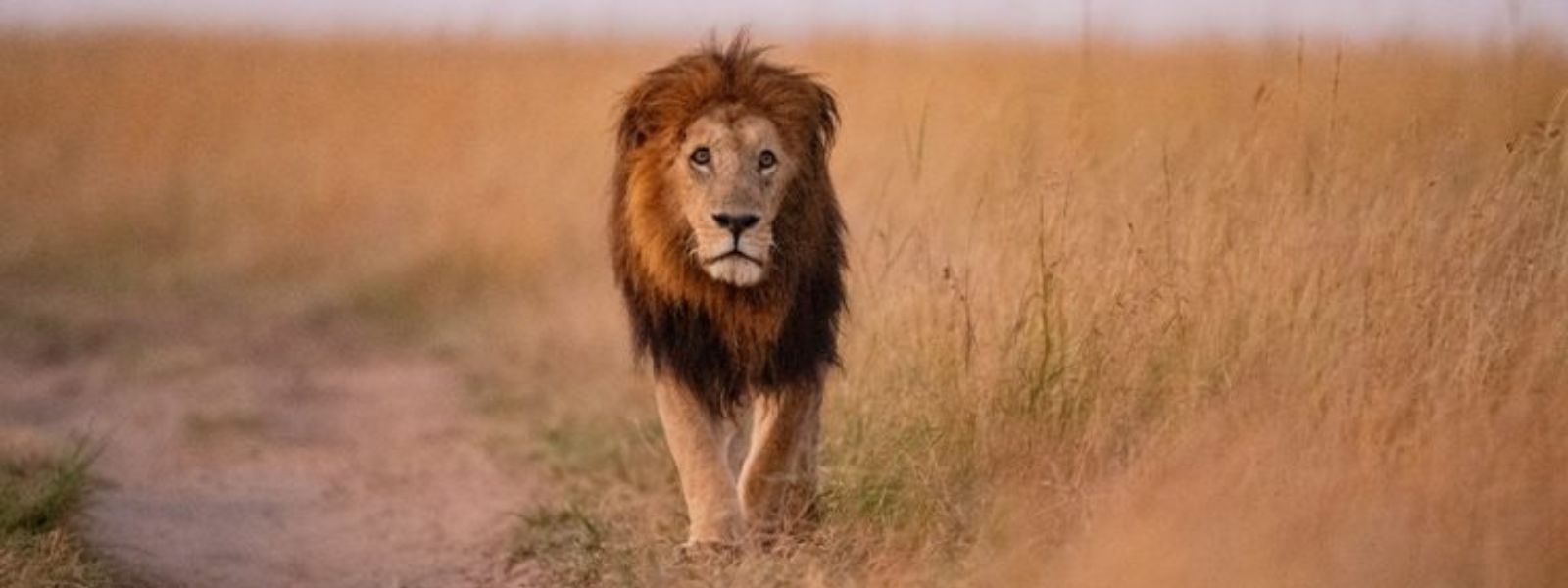
The king of the jungle, renowned for its regal name, the lion is among the most famous big cats in Africa. They are highly social animals, often found in family units called prides of 15 to even 40 individuals. African lions are found in open woodlands, grasslands, savannahs, and can even adapt to semi-arid deserts.
Lions, or more specifically, lionesses, are known for perfecting ambush techniques used for hunting. In a lion pride, lionesses are responsible for bringing food to lions and cubs. With a combination of teamwork and stealth, they attack and ambush their predators, utilizing only a fraction of their stamina.
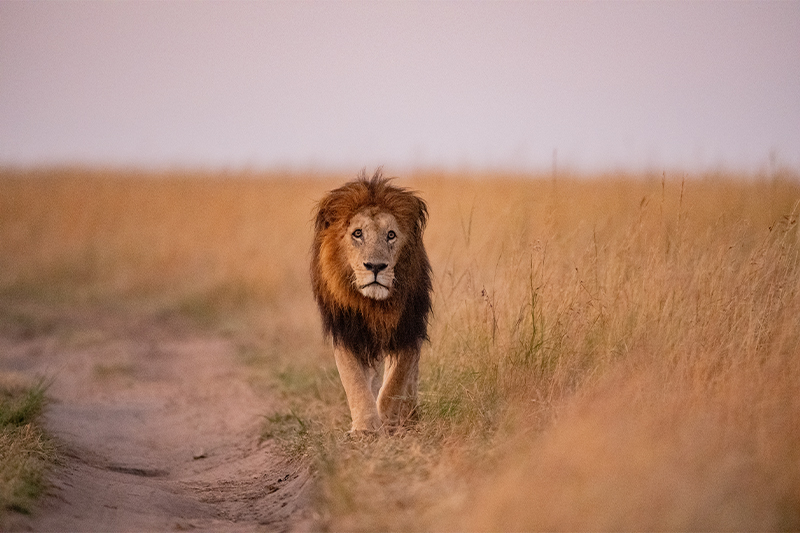
Lions are known to hunt at night, due to their nocturnal behaviour. They first hide in tall grasses to camouflage, moving slowly towards their target. Once they are close enough, they pounce on their prey with a short yet powerful charge. They use their sharp claws and sharp teeth; a bite to the throat and neck suffices.
Lions have a low hunting rate, but the chances of successful kills double if they hunt in groups. Their common prey includes buffalo, zebra, wildebeest, giraffe, and other medium-sized ungulates.
According to the International Union for Conservation of Nature (IUCN) Red List, the status of lions is vulnerable. An estimated 20000 lions are left in the wild, while there were more than 200,000 lions a century ago. Ongoing key conservation strategies include reducing human-wildlife conflict, measures against poaching, monitoring, and research.
Fun fact: The iconic lion’s roar can be heard from as far as 5 miles or 8 km away.
African Leopard
Recognizable due to their black spots or rosettes along with a sleek body, leopards are a part of the big cats of Africa. They thrive in various environments found in Africa, be it dense tropical grasslands, mountainous regions, grasslands, savannahs, and similar habitats. Leopards are highly elusive creatures. They only meet fellow leopards for mating, while most of their life is spent in solitude. Even female leopards stay with their cubs for a maximum of two years before the young leopards fend off on their own.
Similar to the lion, the leopard also uses stealth and ambush techniques to hunt. However, while the lion conserves its energy, the leopard uses its full strength to kill. The black rosettes on its body help blend in with grassy savannahs, forests, and riverine bushes. The leopard is skilled at stalking, moving silently to approach the prey.
Once close to the prey, they launch a powerful attack on the animals. Its powerful forelegs and claws help pull the prey down while the fatal bite is delivered to the throat, causing strangulation or suffocation. Leopards have exceptionally powerful jaws, which result in crushed bones and skulls of the prey.
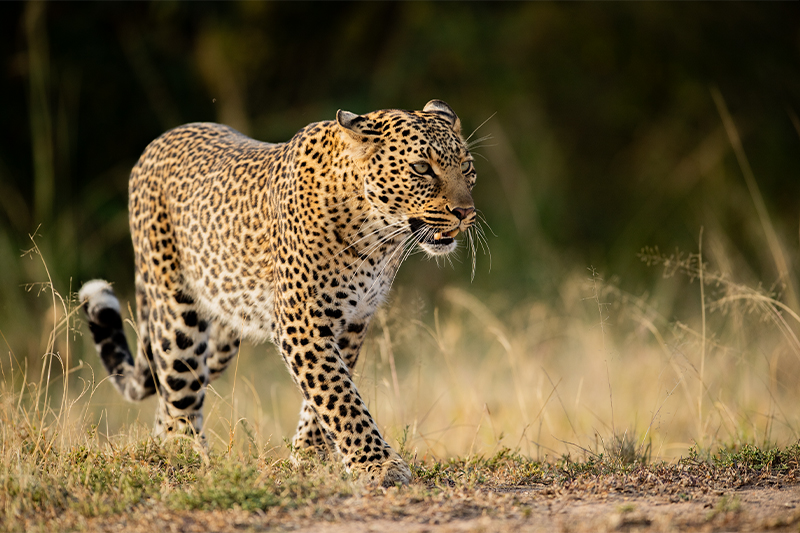
Leopards are nocturnal creatures, and their hunting is in action only at night. They like to hunt medium-sized prey such as impalas, warthogs, baboons, and more. A unique skill exhibited by the leopard is their ability to climb trees. The leopard uses its strong legs to climb treetops while dragging the prey. This is done because leopards are unable to defend their food on ground when attacked by groups of lions, hyenas, wild dogs, or vultures. Once the carcass is wedged securely between the trees, they feed on it for days, undisturbed.
According to the IUCN Red List, the leopard is declared a vulnerable species due to habitat loss, frequent human-wildlife conflict, and poaching. Conservation efforts such as community-based conflict mitigation, habitats and corridor restoration, the use of technology such as GPS collars to track movements, and more are ongoing.
Fun fact: leopards have four toes on their back paw but five on their front. They use the extra toe to bring down their prey during hunting.
African Cheetah
The fastest in the big cat group is the cheetah, also known as the world’s fastest hunter. Cheetahs appear slender with solid black spots on their body and the distinctive tear marks on their face.
Cheetah’s social structures differ wherein the female cheetahs remain solitary and only associate with their cubs. On the other hand, male cheetahs form small coalitions with other male cheetahs, usually their brother and seldom unrelated males. Common habitats home to cheetahs are savannah grasslands, mountain regions, and deserts.
Cheetahs survey the area from a high point, such as termite mounds, and spot prey even 3 miles or 5 km away. Then they use their stealth approach to move quietly behind their prey. They get within a sprinting range of 50 to 100 meters. Once within the range, they unleash a powerful sprint, running at a speed of up to 120 km per hour. Unlike leopards and lions, cheetahs relentlessly chase their prey to kill. Once they get close, they use their foreleg to trip the animal. Cheetahs aren’t as heavy as leopards and lions, and so, use their teeth to bite the neck or throat of the prey.
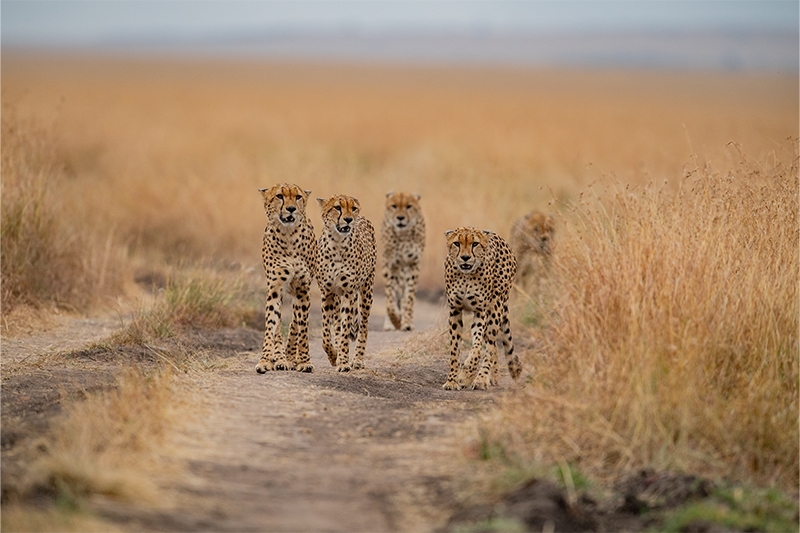
Cheetahs prey on small to medium-sized ungulates like gazelles, impalas, and even hares and birds. While the female cheetah hunts alone, male cheetahs can even take down adult wildebeest or kudu as they kill in a coalition.
Only 6000 to 7000 wild cheetahs remain in Africa, as their status remains vulnerable according to the IUCN Red List. Besides habitat loss, human-wildlife conflict, and illegal trade, cheetah cubs also suffer a high mortality rate. To counter these problems, conservation measures such as reintroductions and translocations of the species, studying and implementing plans for the cheetah’s genetic health, and securing protected areas are some of them.
Fun fact: Cheetahs are the only big cats that do not roar. Instead, they purr, chirp, and meow, similar to a domesticated cat.
The best spots to see the African predators
Unique and guaranteed sightings of the lions are best seen in East Africa and Southern Africa. Kenya’s Masai Mara and Tanzania’s Serengeti rank as the top places due to the high lion density. Well-established parks such as Kruger’s National Park in South Africa and Chobe National Park in Botswana house lion prides.
The shy and elusive leopards are best observed in the Sabi Sands Game Reserve in South Africa, South Luangwa National Park in Zambia, and the Okavango Delta in Botswana.
Exclusive sightings of cheetahs are best observed in East Africa. The Namiri Plains in Eastern Serengeti have one of the highest densities of cheetahs in Africa. Lewa Wildlife Conservancy in Kenya and Ruaha National Park offer good opportunities to see cheetahs.
The contrasting, yet equally magnificent, lives of the Lion, Leopard, and Cheetah define the raw power and persistent fragility of Africa’s big cat legacy
If you loved reading this story, then subscribe to our blog here (it will ask to verify your email) to get inspiring travel stories and trivia delivered to your email. Stories about wildlife trivia, cultural experiences, curated luxury hotel lists, underrated places to travel, polar journeys and much more.