

If you want to experience authentic African safaris, Kenya’s Masai Mara and Tanzania’s Serengeti National Park are ideal. They are ranked as the top safari destinations that allow you to witness the flourishing biodiversity of Africa. The Mara-Serengeti ecosystem is among the most significant ecosystems despite belonging to two different countries. The Mara Reserve and Serengeti park border each other, forming a single, continuous corridor.
For an unforgettable experience, check out our Masai Mara tour packages or explore the ultimate adventure with our Serengeti safari itinerary.
If you’re wondering which park you should choose for your safari trip, here are some key differences to keep in mind:
Topography
Serengeti is the third largest park in Tanzania, measuring a massive 14750 square kilometers in size. The name ‘Serenegti’ in the Maasai language means ‘the land that runs forever’ . It refers to the endless savannah plains that seem to stretch as far as one can see. Rocky outcrops, riverine forests, and waterholes are some landscapes you can see in the Serengeti. Due to its large size, Serenegti offers remote wilderness.
Compared to Serengeti, Masai Mara is a smaller park, covering an area of 1510 square kilometres. The name of the park comes from the Maasai language. ‘Maasai’ refers to the indigenous tribe living in the park, and ’Mara’ meansspotted. The spotted plains of the Maasai land are covered in baobab and acacia trees,along with riverine forests, rolling grasslands, cliffs, and escarpments. There are more hills in Masai Mara than in the Serengeti.
Wildlife
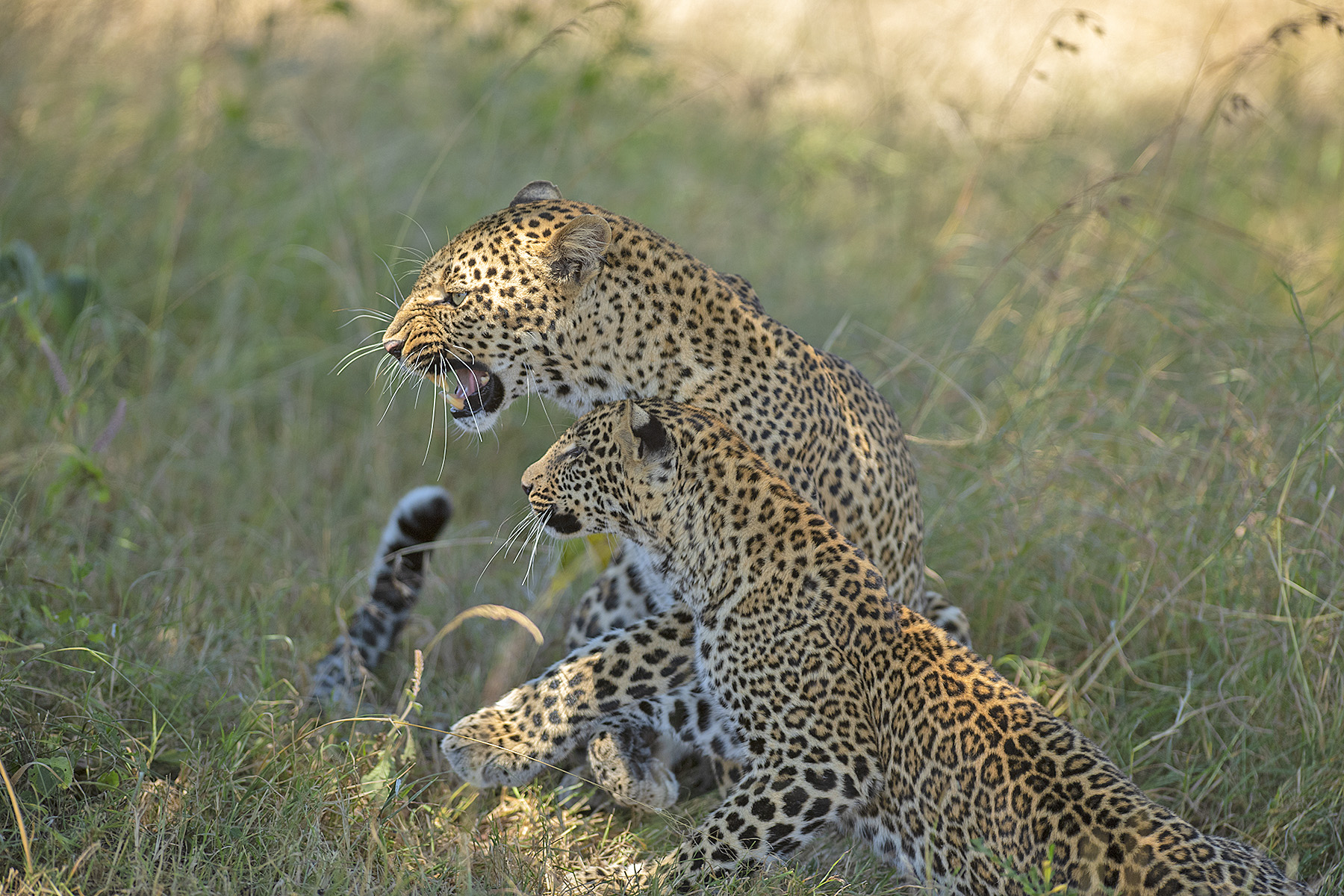
Both parks are rich in wildlife, boasting a healthy population of various animal species. The Big Five group (lions, leopards, elephants, cape buffalo, and rhino), several species of big cats, small cats, ungulates, and many other animals can be witnessed.
Due to its large size, wildlife in the Serengeti is spread out in various locations of the park. While it requires a certain level of patience to spot animals, a variety of diverse species and predator-prey interactions can be witnessed. The Seronera area is best for spotting predators in action, while the Grumeti River allows you to see various animals congregate in one place.
In contrast to it, Masai Mara is smaller in size and holds a dense wildlife population. Game drives around the park allow for a quick and easy game viewing session. The Mara Triangle is famous for its rhino population and other big game sightings, while the Mara North Conservancy, the Mushaira sector, and other conservancies in the reserve offer excellent game watching.
The Great Migration
The annual phenomenon of the wildebeest migration, or the Great Migration, is observed in both the Mara and Serengeti. The shared ecosystem of Mara-Serengeti plays an integral role in supporting this migration, offering a vital corridor to help the animals migrate. Millions of wildebeest, thousands of zebras, and hundreds of other ungulates embark on this migration for pasture.
An Approximate Timeline of the Migration
The calving season in Serengeti begins in January and continues until March. Wildebeest and other ungulate species give birth to calves during this period. Thousands of wildebeest calves are born every day, attracting hungry predators like lions, leopards, and hyenas towards them. You can expect to see thrilling hunts and chases in these months. The Central (Seronera area) and Western Serengeti are filled with wildebeest herds slowly travelling during the months of April and May. From June to July, wildebeest come across the Grumeti River. The river. situated in the western corridor of Serengeti, is infested with deadly Nile crocodiles. Witnessing the river crossing is a heart-pounding experience that truly exposes the unbridled force of nature.
Wildebeests that survive the river crossing continue to head towards the Masai Mara. Between late July to mid mid-September, wildebeests face another hurdle, the Mara River crossing. They yet again face the jaws of the Nile crocodiles and even stronger current of the river. The animals strive to reach the other end of the bank amidst a dramatic and exhilarating struggle.
Wildebeests and other ungulates who get lucky twice with the river crossing finally enter the Mara and enjoy the lush, green plains. Mara Triangle or any of the private Mara conservancies offer excellent viewing of the herds. They remain in Mara till November before they head back towards the South sections of Serengeti or the Ndutu Plains to prepare for their journey all over again.
The wildebeest herds prefer to stay in the Serengeti due to its vastness; however, dramatic river crossings and wildlife viewing are ideal in Mara.
Tourist Crowds
Masai Mara is a famous yet compact park, attracting tourists from all over the world. You may encounter more tourists and safari vehicles in the main reserve, especially during the peak season. It is generally advised to stay in private conservancies of the Mara where crowds are less. You can also choose to enjoy other unique safari activities in Mara’s private conservancies, such as nighttime game drives and walking safaris that are not permitted in the main reserve.
On the other hand, Serengeti is more secluded, offering a remote safari experience than Mara. Due to its huge size, tourist crowds are dispersed accordingly, allowing you to enjoy quieter and longer safaris.
Which Park Should You Go To?
Both parks offer impressive safaris all year-round. However, it all comes down to the travelers’ preferences and interests. If you would like to see dramatic yet guaranteed wildlife viewing and have a fixed budget, while being short on time, head to Masai Mara.. But if you have a flexible budget, longer duration of stay and want to enjoy secluded safaris with the best views of the migration during the calving season, choose Serengeti.
If you want to embark on the ultimate African adventure, combine both parks to see the best of the Mara-Serengeti ecosystem.